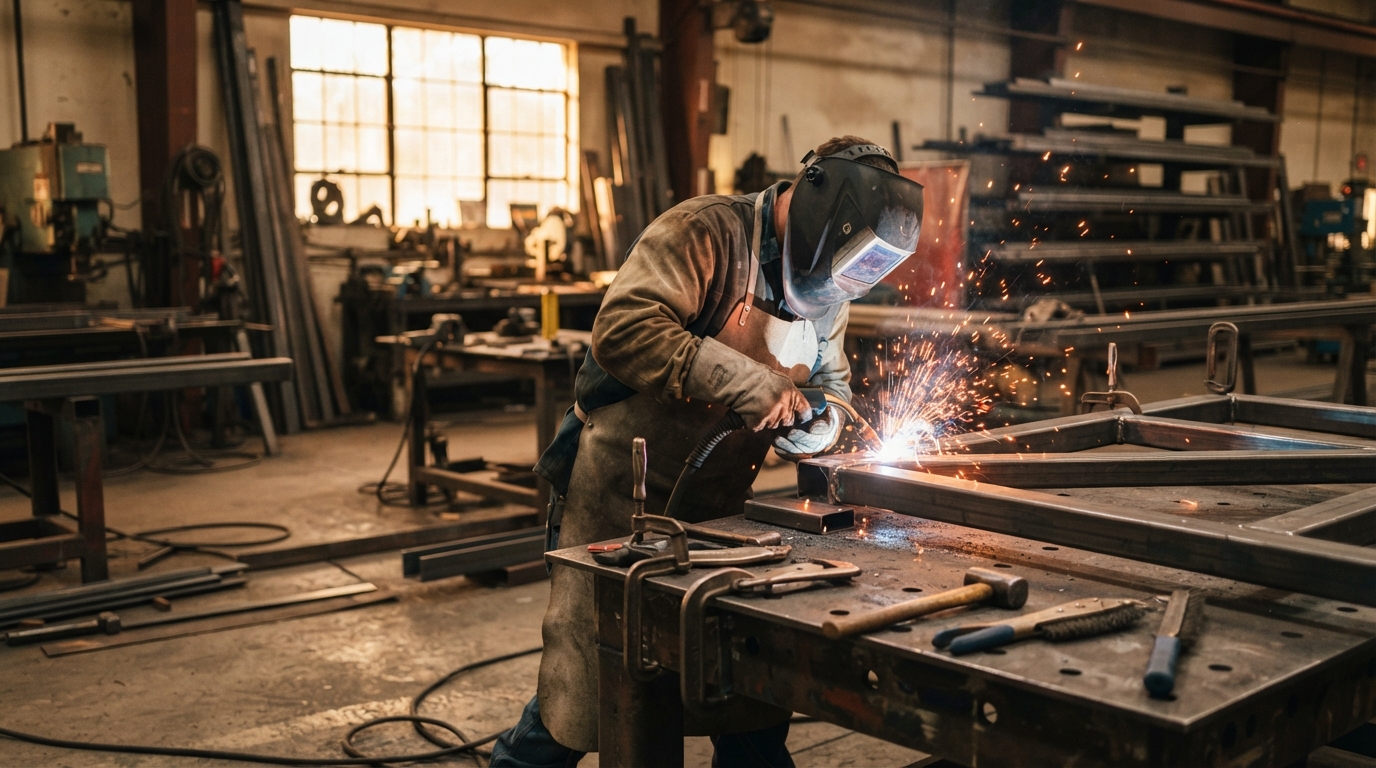
• Custom welding shapes, joins, and reinforces metal to fit project-specific dimensions, loads, and design requirements rather than standard stock parts.
• Material choice, joint design, and finishing method determine durability and cost for residential, commercial, and structural applications.
• Project planning should account for site access, local permitting, and timeline before fabrication begins.
Custom welding refers to the process of fabricating or repairing metal components to exact specifications rather than relying on mass-produced parts, allowing fit, strength, and finish to match a specific structure or design. This approach matters whenever a project calls for dimensions, angles, or load requirements that off-the-shelf metalwork cannot satisfy.
Anyone planning a structural repair, custom railing, or architectural metal feature benefits from understanding how Custom Welding differs from standard fabrication. The process typically starts with a design review, moves through material selection, and ends with welding, finishing, and quality inspection. Each stage affects how the finished piece performs under weather, weight, and daily use.
How Custom Welding Differs From Standard Fabrication
Standard fabrication relies on pre-made components sized for common applications, while custom work is built around the measurements and performance needs of one specific project.
• Dimensions are drawn or measured for the exact space, not adjusted from a stock catalog size.
• Joint types and weld patterns are selected based on the load the piece will carry.
• Material grade can be matched to the application, whether that means corrosion resistance, weight limits, or appearance.
This process suits projects such as custom gates, staircases, structural supports, and equipment repairs where a generic part would not fit or perform correctly.
Materials and Methods Used in Metal Fabrication
Metal fabrication projects commonly use steel, stainless steel, and aluminum, each suited to different environments and structural demands. Steel offers strength for load-bearing work, stainless steel resists corrosion in moisture-prone settings, and aluminum reduces weight for applications where that matters.
|
Material |
Common Use |
Key Advantage |
|
Steel |
Structural supports, frames |
High strength, cost-effective |
|
Stainless Steel |
Outdoor railings, marine-adjacent sites |
Corrosion resistance |
|
Aluminum |
Light fixtures, trim |
Lightweight, easy to handle |
Weld quality depends on technique as much as material. The American Welding Society publishes standards that guide joint design, inspection criteria, and welder qualification across structural and general fabrication work.
Planning a Welding Project in Tacoma, WA
Projects in Tacoma, WA often involve exposure to coastal moisture and seasonal temperature swings, both of which influence material selection and finishing. A piece installed outdoors needs corrosion protection appropriate to that climate, while interior structural work focuses more on load capacity and code compliance.
Before fabrication begins, property owners should confirm:
1. Whether local permitting applies to structural or exterior metalwork.
2. What site access is available for equipment and material delivery.
3. How weather conditions might affect installation timing.
Learn About Custom Welding Solutions serves customers across Tacoma, WA, supporting projects that require fabrication matched to regional conditions. Project scope and site conditions generally determine how long a custom job takes from design to completion.
Frequently Asked Questions
What is the difference between welding and custom welding? Standard welding joins existing parts, while custom welding designs and fabricates pieces to match a specific project’s measurements, load requirements, and finish.
How long does a custom metal fabrication project usually take? Timelines vary based on material availability, design complexity, and site access, so project-specific estimates are more reliable than general averages.
Does custom welding cost more than standard metalwork? Custom pieces can cost more upfront due to design and material matching, though they often reduce long-term issues tied to poor fit or inadequate load capacity.
What materials hold up best outdoors in the Pacific Northwest? Stainless steel and properly coated steel are commonly chosen for outdoor applications because of their resistance to moisture-related corrosion.
Specifications and service area information for Learn About Custom Welding Solutions are published for reference by property owners planning a fabrication project.