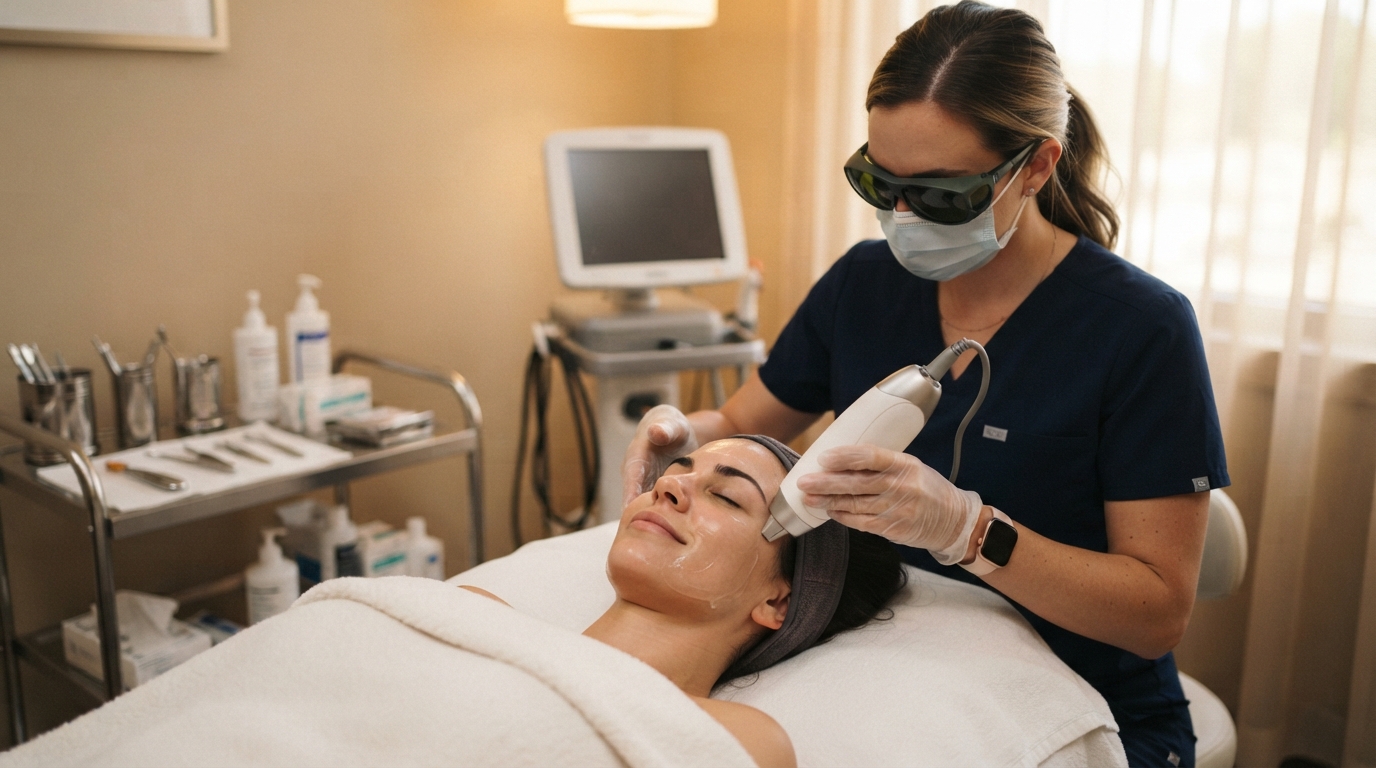
Essentially:
• Facial laser skin resurfacing uses targeted light energy to address fine lines, uneven pigment, and rough texture by prompting new collagen production.
• Results typically develop over several weeks as treated skin cells are replaced.
• Candidacy and downtime vary by skin type, laser type, and the specific texture or tone concern being treated.
Facial laser skin resurfacing works by directing concentrated light energy into the skin to remove damaged outer layers or stimulate deeper collagen remodeling, which smooths texture and evens out discoloration over time. The result is a gradual improvement in skin tone consistency and surface smoothness rather than an instant change.
Many people searching for this treatment want to know whether it can realistically address sun damage, acne scarring, or dull, uneven skin before committing to a provider. Facial laser skin resurfacing is typically evaluated during an initial skin consultation, where a provider reviews skin type, sun exposure history, and specific texture or tone concerns before recommending a treatment plan.
How the Treatment Affects Skin Texture and Tone
Laser resurfacing targets the skin at a cellular level, which is why it can influence both texture and color unevenness at the same time.
• Collagen stimulation : Controlled thermal energy encourages the dermis to produce new collagen, which can reduce the appearance of fine lines and shallow scarring over several months.
• Pigment correction : Certain wavelengths target excess melanin, helping to fade sun spots, age spots, and areas of uneven tone.
• Surface renewal : Removing or disrupting the outermost skin layer allows smoother, more evenly textured skin to surface as healing progresses.
Because these effects build gradually, most people notice a visible change in skin quality several weeks after a session rather than immediately afterward.
What to Expect Before and After a Session
Preparation and aftercare play a direct role in how well skin responds to resurfacing treatment.
1. Pre-treatment consultation : A provider typically assesses skin type, medical history, and any active skin conditions before confirming candidacy.
2. Sun protection beforehand : Limiting sun exposure in the weeks before treatment reduces the risk of complications and supports more even results.
3. Post-treatment care : Gentle cleansing, moisturizing, and daily sunscreen use are commonly recommended while skin heals.
4. Follow-up sessions : Depending on the laser type and concern being treated, more than one session may be needed to reach the desired texture and tone improvement.
According to the American Academy of Dermatology, laser resurfacing is one of several options dermatologists may use to treat acne scarring and improve skin surface irregularities.
Comparing Common Resurfacing Approaches
Laser resurfacing is not a single standardized procedure. Providers may select different laser types depending on the skin concern and downtime tolerance of the person being treated.
| Approach | Primary Target | Typical Downtime |
| Ablative laser resurfacing | Deeper wrinkles, scarring | Several days to weeks |
| Non-ablative laser resurfacing | Tone, mild texture issues | Minimal to none |
| Fractional laser resurfacing | Texture and pigment combined | Days, varies by intensity |
Choosing between these approaches depends on how much texture or tone correction is needed and how much recovery time a person can accommodate.
Local Considerations for Nashville, TN Residents
Climate and lifestyle factors in Nashville, TN can influence how skin responds to resurfacing treatment and how it should be cared for afterward. Humid summers and extended sun exposure throughout the region can contribute to pigment irregularities and texture changes that many residents seek to address. Consistent sun protection after treatment is particularly relevant locally, since UV exposure can affect healing skin more noticeably in warmer months. Based in USA, The Erasure serves customers across Nashville, TN, and skin treatment decisions for residents in that area are generally made in consultation with a licensed provider familiar with these regional factors.
Frequently Asked Questions
Is facial laser skin resurfacing painful? Most people describe sensations ranging from mild warmth to a snapping feeling, often managed with topical numbing cream or cooling devices during the session.
How many sessions are typically needed? This depends on the laser type and the severity of the texture or tone concern; some non-ablative treatments require multiple sessions, while ablative treatments may need only one.
How long do results last? Results vary by individual, but ongoing sun protection and skincare routines help maintain improvements in texture and tone over time.
Who should avoid this treatment? People with active skin infections, certain skin conditions, or very recent sun exposure are often advised to wait or consult a provider before proceeding.
Business Info: Service information related to facial treatments in the Nashville, TN area, including background on relevant procedures, can be found through The Erasure.
Checking Current Service Details
Current availability details for The Erasure are published for the local service area.