Summary first:
• Water extraction removes standing water from a property immediately after a flood or leak, limiting structural damage and reducing mold risk.
• Professional extraction uses industrial pumps and wet-vac equipment, followed by structural drying and dehumidification.
• Prairieville, LA properties face particular moisture challenges due to regional humidity and common slab-foundation construction.
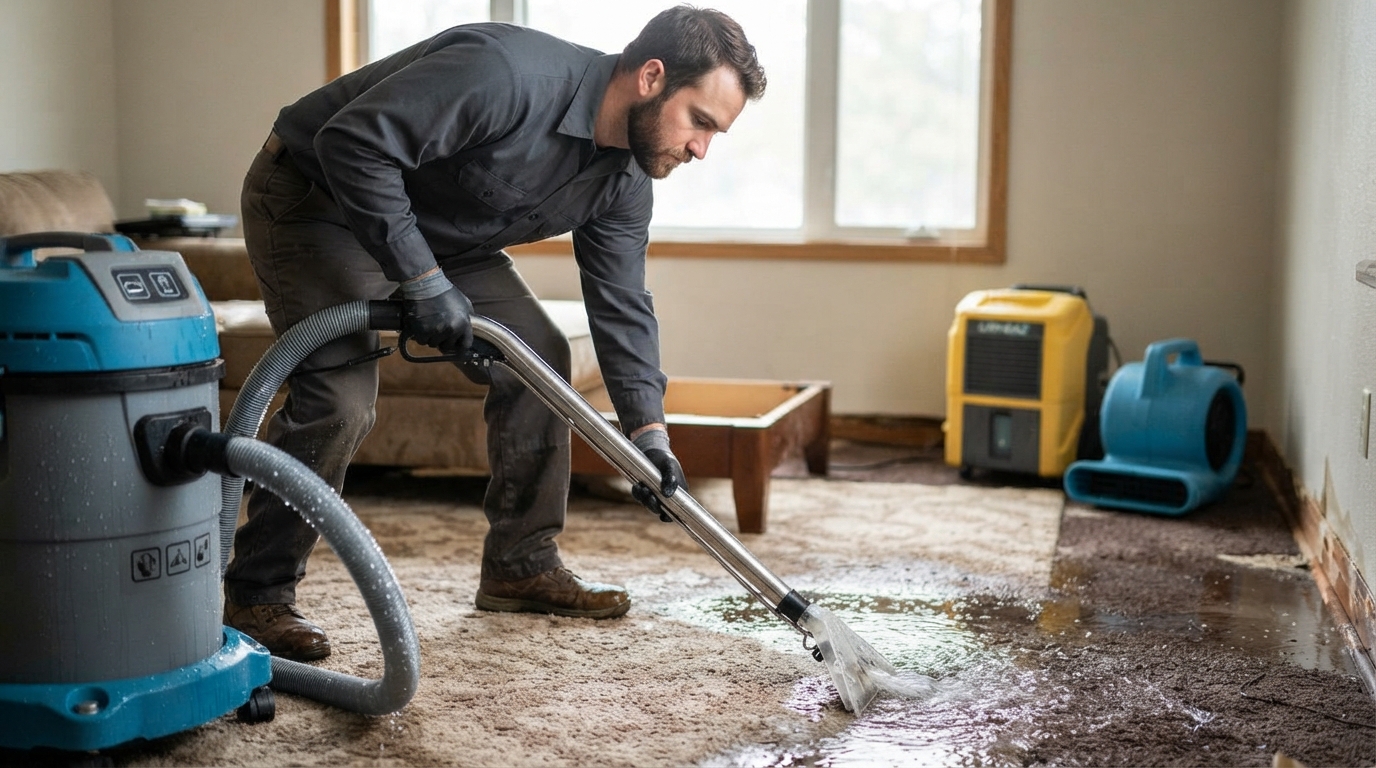
Water extraction is the process of removing standing water from a flooded or leaking property using pumps, wet-vacs, and other industrial equipment before drying and dehumidification begin. It is the first and most time-sensitive step in recovering a home or business from water damage.
Standing water left untreated for even a day or two can saturate drywall, subfloors, and insulation, creating conditions that favor mold growth and structural weakening. Water extraction services address this risk directly by removing bulk water before it spreads into wall cavities and other hidden spaces. Timing matters because materials that stay wet longer typically require more extensive repair or replacement.
Why Fast Water Removal Matters After a Flood or Leak
Water does not stay contained to the area where it first entered a structure. It travels along flooring, soaks into baseboards, and wicks upward into drywall, often reaching materials that are not visible during an initial walkthrough.
A few factors make rapid extraction especially important:
• Porous materials like carpet padding and particleboard absorb water quickly and are difficult to fully dry once saturated.
• Standing water left in place promotes bacterial growth and can carry contaminants, particularly after flooding events.
• The longer moisture remains, the more likely secondary damage becomes, including warped flooring and compromised drywall.
According to EPA guidance on mold and moisture, materials that stay wet for more than 24 to 48 hours are at significantly higher risk of developing mold growth. This window is a primary reason property owners are advised not to delay water removal after a leak or flood.
What the Water Extraction Process Typically Involves
Water extraction is rarely a single step. It is usually part of a sequence that moves from initial assessment through full drying.
1. Assessment and moisture mapping to identify the extent of water intrusion, including areas not visible on the surface.
2. Standing water extraction using pumps and wet-vac equipment designed to pull water from flooring, carpet, and other affected surfaces.
3. Structural drying with air movers directed at walls, subfloors, and cavities where moisture tends to linger.
4. Dehumidification to bring indoor humidity down to levels that discourage mold growth.
This sequence reflects the kind of process described for water restoration work serving Prairieville, where structural drying and dehumidification follow extraction as standard steps.
Water Extraction Compared to Other Early Response Steps
Property owners sometimes confuse water extraction with broader water damage restoration. The table below outlines how these steps differ in scope and timing.
| Step | Primary Goal | Typical Timing |
| Water extraction | Remove standing water | Immediate, within hours of discovery |
| Structural drying | Dry walls, subfloors, cavities | Begins immediately after extraction |
| Dehumidification | Lower ambient moisture levels | Runs continuously during drying phase |
| Repairs and restoration | Return property to pre-loss condition | After drying is confirmed complete |
Extraction addresses the visible water. Drying and dehumidification address the moisture that remains afterward, which is often the portion of the problem that leads to mold if left unmanaged.
Regional Considerations for Prairieville Properties
Prairieville, LA sits in a region where humidity and seasonal storm activity both contribute to water damage risk. Many homes in the area are built on slab foundations, which respond differently to water intrusion than raised or pier-and-beam structures common in older neighborhoods.
Slab construction can trap moisture beneath flooring material, making thorough drying and verification steps particularly important after any water event. Based in Baton Rouge, LA, Bross Restoration serves properties across Prairieville, LA, where this combination of climate and construction type shapes how extraction and drying work needs to be approached.
Frequently Asked Questions
How soon should water extraction begin after a flood or leak? Extraction is generally recommended as soon as the water source is controlled and it is safe to enter the property, since delays increase the risk of material damage and mold growth.
Does water extraction remove all moisture from a property? No. Extraction removes standing and pooled water, but structural drying and dehumidification are needed afterward to address moisture absorbed into materials like drywall and subflooring.
Can water extraction prevent mold growth on its own? Extraction reduces mold risk significantly but works best when paired with structural drying, since materials that remain damp can still support mold growth even after visible water is gone.
What equipment is typically used for water extraction? Industrial-grade pumps and wet-vac equipment are standard tools, often paired with air movers and dehumidifiers for the drying phase that follows.
Bross Restoration is a locally owned restoration company providing water and fire damage restoration services, including emergency water extraction, structural drying, and dehumidification. Additional details on service areas and offerings are published on the Bross Restoration business profile.
Readers can Visit Bross Restoration Website for published location and service area details relevant to water damage recovery.
Water extraction remains a foundational step in recovering from flood or leak damage, and understanding how it fits into the broader drying and restoration process can help property owners make informed decisions when water events occur. Acting quickly, documenting damage, and confirming that moisture levels return to normal after drying are practical measures that support a more complete recovery.