Snapshot:
• Commercial jetting uses high-pressure water to scour the full interior of a pipe, clearing grease, scale, and debris that mechanical snaking leaves behind.
• Repeat clogs, slow floor drains, and recurring kitchen backups are common signs that a property may need jetting rather than another snake visit.
• Scheduling outside business hours and pairing jetting with a camera inspection are standard practices for commercial properties.
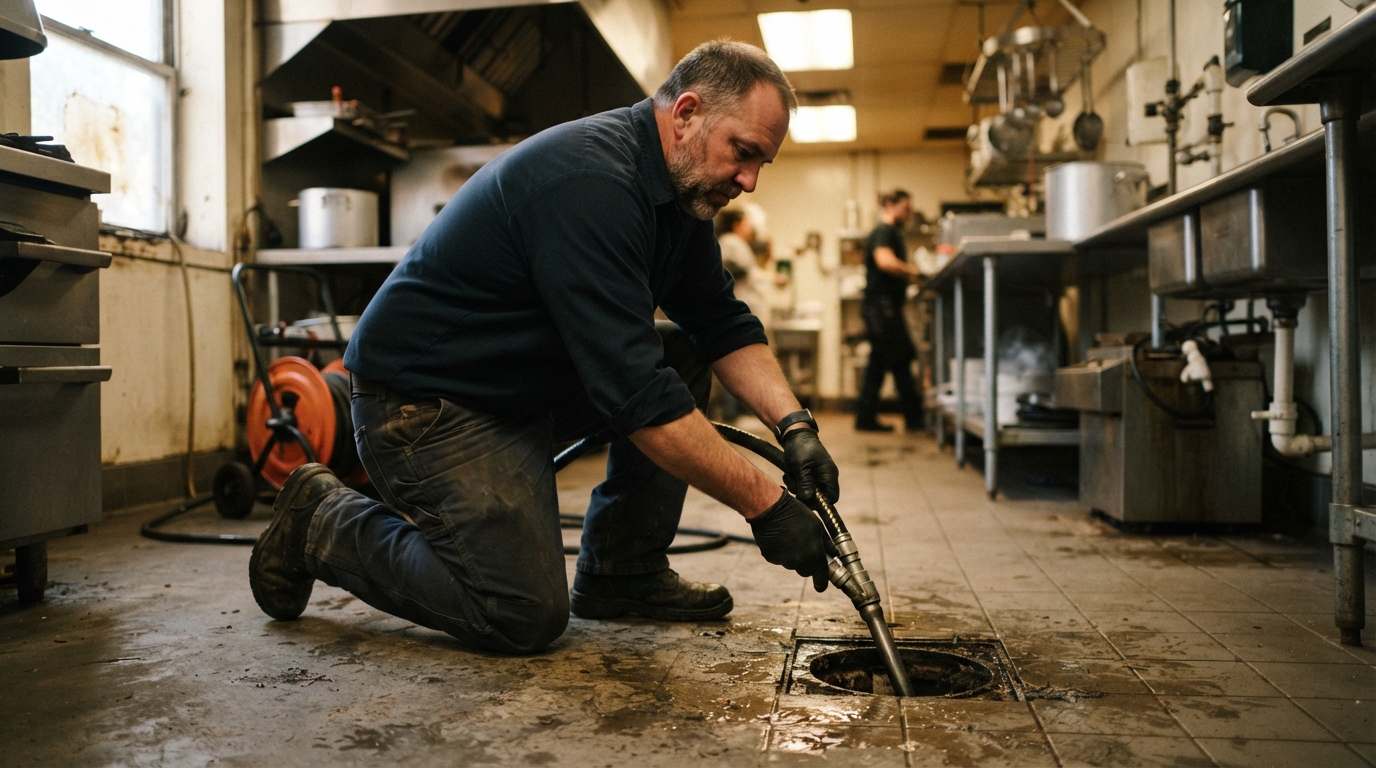
Recurring clogs, slow floor drains, and grease-related backups in a commercial kitchen or multi-tenant building usually signal that standard snaking is no longer enough. Commercial jetting addresses buildup along the entire interior wall of a pipe rather than just punching a channel through the center of a clog, which is why facility managers often turn to it once a drain starts clogging again within weeks of being cleared.
A drain snake works by boring a hole through whatever is blocking the line, leaving material coating the pipe walls behind. The nozzle design sets jetting apart from other commercial line-cleaning methods, while a cable machine works by boring a hole through whatever is clogging the line. That difference matters most in properties with heavy, continuous drain use, where residue rebuilds quickly after a partial clearing.
Signs a Property Needs Jetting Over Snaking
Several patterns point toward hydro jetting as the more appropriate fix:
• A drain that clogs again within weeks of a prior service call, rather than months later.
• Recurring odors coming from floor drains or kitchen lines, which often trace back to organic material decomposing inside the pipe.
• Grease-heavy lines in restaurant or food-service kitchens that resist standard cabling.
• Slow-draining floor sinks or multiple fixtures backing up at once, suggesting a broader blockage along the pipe wall rather than a single obstruction.
A drain that keeps clogging again within weeks of being cleared is often the biggest indicator that a property needs jetting rather than another snake visit. Hydro jetting scrubs the entire interior surface of the pipe, which is why it is often the preferred method for commercial systems where grease, sediment, and scale accumulate continuously rather than showing up as a single obstruction.
How the Process Works and What to Expect
Hydro jetting works by pushing water through a drain line at high pressure, up to roughly 4,000 psi for commercial work, using a specialized hose and nozzle. The hose is guided through a cleanout or access point, and the pressurized stream is directed both forward and back through the line to dislodge material along the full pipe diameter.
A few practical points apply to most commercial jetting jobs:
1. A camera inspection beforehand can confirm the line’s condition and rule out structural damage that jetting cannot repair.
2. If a pipe is collapsed, badly deteriorated, offset, or structurally damaged, cleaning alone cannot repair it.
3. After cleaning, flow should be tested, and where warranted a follow-up camera inspection can help confirm cleaning results and reveal damage that had been hidden behind buildup.
For restaurants and other food-service operations in Littleton, CO, grease management is an ongoing compliance issue as well as a plumbing one. Fats, oils and grease generated by restaurants, commercial kitchens, cafeterias, and other food service establishments can accumulate in sewer lines and restrict wastewater flow. Local wastewater authorities typically expect grease interceptors and drain lines to be maintained on a documented schedule, which makes periodic jetting a practical complement to grease trap service rather than a one-time fix.
Scheduling Jetting Around Business Operations
Timing matters for properties that cannot afford downtime during business hours. Most commercial work is scheduled outside operating hours to avoid disruption. Facility managers typically weigh a few factors when planning service:
| Factor | What to Consider |
| Clog frequency | Lines clogging within weeks point toward jetting over repeat snaking |
| Business type | Kitchens, grease-heavy lines, and high-traffic restrooms often need more frequent service |
| Pipe condition | A camera check first helps confirm the line can handle high-pressure cleaning |
| Timing | Scheduling after hours limits disruption to staff and customers |
Based in USA, All American Drain Cleaning handles commercial jetting requests for properties across Littleton, CO, including restaurants, offices, retail spaces, and warehouses.
Frequently Asked Questions
How is commercial jetting different from a standard drain snake? A drain snake breaks through or drags past a clog to reopen a channel down the center of the pipe, while hydro jetting scours the entire interior wall of the pipe.
Can jetting help with grease buildup in a commercial kitchen? Grease-heavy lines are one of the clearest cases for jetting, since the pressurized water removes coating along the full pipe wall rather than leaving residue that rebuilds quickly.
Is jetting safe for every type of commercial pipe? Hydro jetting is generally safe for structurally sound commercial drain pipes including cast iron, PVC, ABS, and vitrified clay, though a camera inspection beforehand helps confirm a line is in suitable condition.
Does jetting replace grease trap cleaning? Jetting cleans the drain line itself, while grease trap or interceptor maintenance addresses the separate device that captures grease before it reaches the sewer system; most commercial kitchens need both on a regular schedule.
Scheduling details for All American Drain Cleaning, Llc are available for properties located within the Littleton, CO service area.