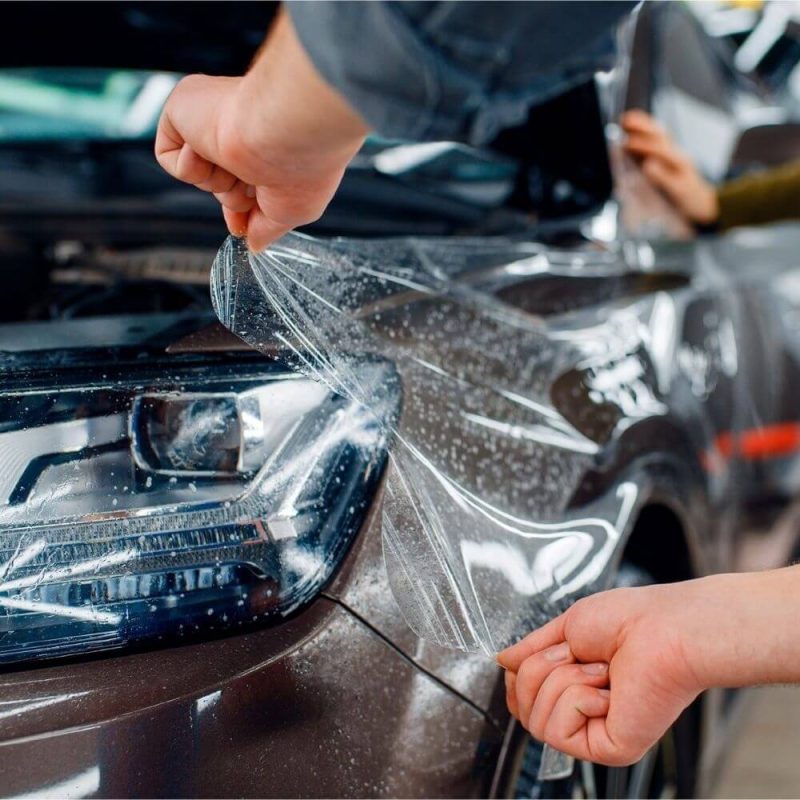
Bug residue should be removed from paint protection film (PPF) as soon as practical using gentle washing methods and cleaning products compatible with the film. Dried insect remains should be softened rather than aggressively scrubbed, because excessive friction and unsuitable chemicals can damage the protective surface.
For drivers in Peoria, AZ, insect buildup is a familiar concern after freeway commutes, evening drives, and trips through surrounding desert communities. Although PPF provides a physical barrier between road contaminants and automotive paint, the film itself still requires appropriate cleaning.
Understanding how insect residue behaves, which removal methods are suitable, and when professional assistance is appropriate can help vehicle owners maintain their protective film without unnecessary damage.
Why Does Bug Residue Stick to Paint Protection Film?
When insects strike a moving vehicle, their remains can spread across the bumper, hood, mirrors, and other forward-facing surfaces.
These deposits contain organic material that can dry and adhere to the vehicle’s exterior. As moisture evaporates, the remaining material becomes more difficult to remove through ordinary rinsing.
Paint protection film creates a protective layer over the painted surface, but it is not completely resistant to staining or contamination.
Dried Residue Is More Difficult to Remove
Fresh insect deposits are generally easier to clean because they have not had as much time to dry and adhere to the surface.
Once the residue hardens, vehicle owners may be tempted to scrub repeatedly or use a stronger cleaning product.
However, excessive rubbing can create surface marks, particularly when dust or other abrasive particles are present.
The safer approach is to loosen the contamination before attempting removal.
Protective Film Still Needs Maintenance
Some PPF products have hydrophobic or stain-resistant properties that make routine cleaning easier.
These features can help reduce the adhesion of certain contaminants, but they do not eliminate the need for maintenance.
Insect remains, bird droppings, and other deposits should not be left on the film indefinitely.
Following the manufacturer’s recommendations helps preserve the film’s appearance and reduces the risk of avoidable surface damage.
What Is the Safest Way to Remove Fresh Bug Residue?
The simplest approach is to address insect deposits before they dry.
For recently accumulated residue, gentle washing with clean water and a compatible automotive shampoo may be sufficient.
Start With a Thorough Rinse
Rinsing helps remove loose dust, road grit, and other particles that could scratch the surface during washing.
Use a gentle stream of water rather than directing concentrated pressure at the film.
Pay attention to areas around mirrors, bumper contours, and exposed film boundaries.
The goal is to loosen surface contamination without disturbing the protective material.
Use a Soft, Clean Wash Mitt
Once loose debris has been rinsed away, use a clean microfiber wash mitt and a shampoo approved for the installed film.
Work gently across the affected area.
Avoid applying additional pressure simply because the residue is visible.
If a deposit remains attached, additional softening is generally preferable to repeated scrubbing.
A wash mitt should also be rinsed regularly to prevent accumulated particles from being dragged across the surface.
Rinse and Dry Carefully
After cleaning, rinse the area thoroughly to remove shampoo and loosened contamination.
Use a clean, soft microfiber drying towel to remove remaining water.
Avoid aggressive wiping, particularly around edges or areas where the film appears damaged.
These basic practices are useful during routine auto detailing because they reduce unnecessary contact with sensitive exterior surfaces.
How Should You Clean Bug Residue That Has Already Dried?
Dried insect deposits require more patience.
Trying to scrape them away can damage the film, while applying excessive force may create scratches or disturb an exposed edge.
A controlled cleaning process is generally more appropriate.
Step 1: Work on a Cool Surface
Whenever possible, park the vehicle in a shaded area and allow the exterior panels to cool before washing.
Cleaning products can dry more quickly on hot surfaces, leaving residue behind and making controlled removal more difficult.
This is especially relevant during warm Arizona afternoons.
A cooler surface provides better conditions for applying and rinsing automotive cleaning products according to their instructions.
Step 2: Soften the Contamination
Begin with water and a film-compatible automotive shampoo.
Allow the cleaning solution to loosen the residue according to the product’s directions.
Do not allow the solution to dry on the surface.
If ordinary shampoo is insufficient, a cleaner specifically approved for the installed PPF may be appropriate.
The correct product depends on the film manufacturer and its care requirements.
Step 3: Remove the Residue Gently
Using a clean microfiber wash mitt or towel, carefully wipe away loosened contamination.
Use light pressure rather than repeatedly scrubbing the same spot.
If resistance remains, stop and reassess instead of increasing force.
A stubborn deposit may require a different approved cleaning product or professional attention.
Step 4: Rinse and Inspect
After removing the residue, rinse the area thoroughly.
Inspect the film for remaining deposits, unusual discoloration, or visible surface changes.
A stain that remains after proper washing may not be ordinary removable dirt.
If the surface appears altered, avoid continuing with increasingly aggressive cleaning methods.
Which Cleaning Products Should Be Avoided on PPF?
One of the most common mistakes in exterior vehicle maintenance is assuming that a product suitable for another surface is automatically safe for paint protection film.
PPF products vary in construction, finish, and manufacturer recommendations.
A cleaning chemical compatible with one film may not be appropriate for another.
Abrasive Compounds and Household Scrubbers
Abrasive polishing compounds, stiff brushes, rough sponges, and household scouring pads can damage the film’s surface.
Even when a product successfully removes a contaminant, it may leave visible marks or change the film’s appearance.
A protective film should not be polished or scrubbed aggressively unless the manufacturer specifically permits the procedure.
Unapproved Solvents and Strong Chemicals
Some chemical cleaners contain ingredients that may damage protective films or their surface coatings.
Strong alkaline cleaners, acidic products, and unapproved solvents should not be applied without checking compatibility.
Certain PPF manufacturers permit specific solvents for stubborn stains under controlled conditions. That does not make those products universally suitable for every film.
When the installed material is unknown, the safest course is to confirm its care requirements before attempting chemical spot treatment.
Improvised Cleaning Techniques
Kitchen sponges, razor blades, fingernails, and sharp scraping tools are inappropriate methods for removing stubborn insect remains.
Such methods can scratch or cut the film.
Hot surfaces, excessive chemical exposure, and aggressive rubbing can also complicate removal.
A cleaning problem should not become an opportunity for preventable damage.
Does Pressure Washing Help Remove Stubborn Insect Residue?
Pressure washing may remove loose exterior contamination, but it should not be used as a substitute for proper cleaning techniques.
A concentrated water stream can damage certain films, particularly around exposed edges.
Manufacturers such as XPEL specifically caution against directing high-pressure water toward film boundaries because it can contribute to lifting.
Why Film Edges Need Special Attention
Paint protection film is installed to conform to the contours of vehicle panels.
Some installations include visible boundaries around bumpers, mirrors, or other components.
Directing a concentrated water stream into these boundaries can force water underneath the material.
If an edge is already loose, pressure washing may worsen the separation.
A Safer Approach to Stubborn Deposits
Rather than increasing water pressure, use appropriate cleaning products and allow additional time for residue to soften.
If the deposit remains firmly attached, a professional can evaluate whether a specialized cleaning method is suitable.
This distinction is important because removing surface contamination and correcting physical film damage are different tasks.
Can Bug Residue Permanently Stain Paint Protection Film?
Insect residue can sometimes leave discoloration or persistent marks, particularly when contamination remains on the surface for an extended period.
However, not every visible spot indicates permanent damage.
The appearance may result from remaining organic residue, surface staining, or a change in the film itself.
Residue Versus Surface Discoloration
A removable deposit typically sits on the film’s surface.
With appropriate cleaning, it may soften and release without leaving a noticeable mark.
Staining can be more complicated.
If discoloration remains after careful cleaning with approved products, repeated scrubbing is unlikely to be the best solution.
Professional evaluation can help determine whether further cleaning is appropriate.
Does Self-Healing PPF Remove Stains?
Some advanced paint protection films have self-healing properties designed to reduce the appearance of minor surface scratches under suitable conditions.
Self-healing technology should not be confused with stain removal.
A film that can recover from certain light surface marks does not necessarily eliminate chemical discoloration or embedded contamination.
The specific performance characteristics depend on the product.
Vehicle owners should review the manufacturer’s documentation rather than assuming all PPF products provide identical protection.
Why Is Bug Buildup a Practical Concern for Peoria Drivers?
Vehicle owners in Peoria regularly use roads connecting residential neighborhoods, commercial areas, and surrounding West Valley communities.
Longer drives and freeway travel can expose forward-facing surfaces to insect impacts and other airborne debris.
The front bumper, hood, and side mirrors are particularly susceptible because of their position on the vehicle.
Heat Can Complicate Cleaning
During hot weather, contaminants and washing solutions may dry quickly on exposed vehicle panels.
This can make cleaning more difficult, especially when a vehicle has been parked outdoors.
Washing in the shade and avoiding overheated surfaces can make the process easier to manage.
The concern is not that Arizona heat automatically damages all protective films, but that environmental conditions influence how contamination should be addressed.
Frequent Drivers May Need More Regular Cleaning
A vehicle used for daily commuting may accumulate insect residue more frequently than one driven occasionally.
For these drivers, visually checking the front bumper and mirrors after longer trips can be useful.
A complete exterior wash may not be necessary after every drive, but prompt attention to visible contamination can reduce the likelihood of stubborn buildup.
Local car detailing can also become part of a broader maintenance routine for owners who want help managing accumulated road grime and exterior contaminants.
When Should Professional Detailing Be Considered?
Routine bug removal can often be handled through appropriate washing.
However, some situations warrant professional assessment.
These include contamination that remains after gentle cleaning, uncertainty about film compatibility, visible edge lifting, or apparent damage to the protective surface.
Professional Exterior Auto Detailing can help address exterior cleanliness and contamination using methods appropriate to the vehicle’s condition.
However, detailing does not automatically correct every PPF stain, adhesive problem, or damaged film section.
A reputable service provider should distinguish between removable contamination and conditions that require evaluation by a film installer.
What Information Should the Vehicle Owner Provide?
Before requesting auto detailing services, vehicle owners should mention whether paint protection film is installed.
Useful information includes:
- The approximate installation date.
- The manufacturer or type of film, if known.
- The location of stubborn insect residue.
- Cleaning products previously used.
- Any visible peeling, lifting, staining, or physical damage.
Providing these details can help guide a more appropriate assessment.
How Can Drivers Reduce Future Bug Residue Buildup?
Preventing every insect impact is unrealistic, but consistent maintenance can make cleanup more manageable.
A practical routine involves inspecting high-exposure areas, removing fresh contamination promptly, and following the installed film’s care instructions.
Vehicle owners should also keep clean microfiber towels and appropriate automotive washing products available for routine maintenance.
For longer trips, checking the front end afterward may help identify deposits before they become difficult to remove.
A professionally installed protective film can provide an additional barrier for suitable painted surfaces, but it still depends on appropriate maintenance.
The goal is not to eliminate every mark or contaminant. It is to reduce unnecessary damage by using cleaning methods suited to the material.
Maintaining Paint Protection Film Without Unnecessary Damage
Bug residue is a manageable part of vehicle ownership when addressed with suitable products and careful cleaning techniques.
The most important steps are straightforward: remove contamination promptly, soften dried deposits, avoid abrasive methods, and follow the film manufacturer’s recommendations.
For Peoria drivers, these habits are especially useful when vehicles are regularly exposed to road debris, insects, dust, and changing outdoor conditions.
Understanding the difference between ordinary contamination and possible film damage can also prevent unnecessary cleaning attempts.
When residue cannot be safely removed through routine washing, professional assessment is generally preferable to experimenting with stronger chemicals or abrasive tools.
About Simply The Best Auto Detail
Located at 9299 W. Olive Ave., Suite 305, Peoria, AZ 85345, Simply The Best Auto Detail provides automotive detailing, paint correction, ceramic coatings, and paint protection film installation for vehicle owners in the West Valley. The company states that it has served the Valley of the Sun since 2005, and its published PPF service information describes a trained installation team. For inquiries, call (623) 210-1134, or find their location on Google Maps.